Exeter History Tellers
George Frost — The Man Who Sparked Exeter’s Growth
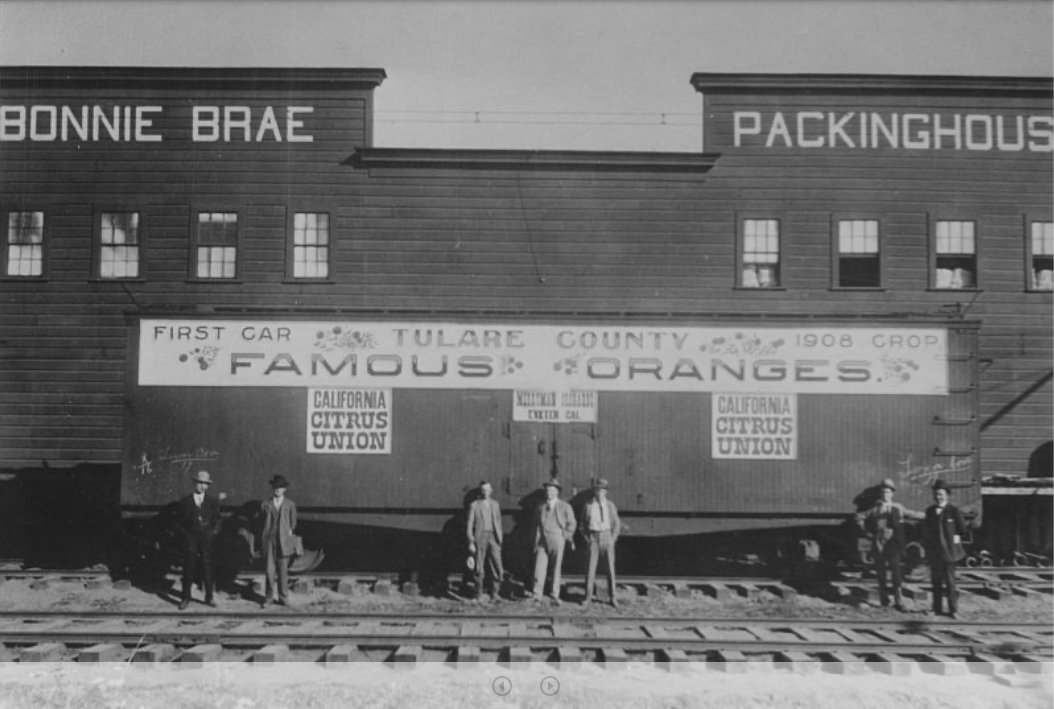
I set out to write about the Merryman family and their influence on early Exeter, but their story begins with another man — George Thomas Frost (1854–1904) — the promoter who brought them here and set Exeter on its path to prosperity.
Born in Michigan just before the Civil War, Frost grew up during Reconstruction and moved with his family to Riverside, California, where agriculture was booming. His father, George E. Frost, was a respected county trustee and civic leader. The younger Frost launched a nursery business around 1890, growing seedlings for Southern California’s fast-growing citrus industry.
Looking north for new opportunities, Frost struck a deal with the Pioneer Land Company in Porterville to plant 100 acres of oranges. The venture flourished. Within a few years his fruit was winning medals at citrus fairs, proving Tulare County could compete with the south. While others feared frost damage, Frost realized that Tulare County’s oranges ripened earlier, allowing him to ship trainloads east before Thanksgiving — and sell at premium prices.
One of Frost’s Porterville contacts was Henry Hathaway, a Wisconsin native whose sister, Agnes, had married R.C. Merryman of Marinette, Wisconsin. Hathaway introduced Frost to the Merrymans, convincing them that citrus offered a profitable escape from the economic depression following the Panic of 1893. Backed by A.C. Merryman’s timber wealth, the group decided to invest.
In 1896, Frost purchased 320 acres northeast of Exeter, building flumes to bring Kaweah River water to the land and planting 250 acres in citrus. The Merrymans and local investor Martin Wirth joined him. Frost named the ranch “Bonnie Brae,” Gaelic for “Beautiful Hill.” A packing house soon rose near the Southern Pacific tracks, now the site of Exeter Engineering, shipping early-season fruit to eastern markets.
Frost’s energy was boundless, even as his health declined. By 1904 he was gone at only 50, but his legacy endured. The workers he employed settled nearby, creating demand for homes, stores, and services. Exeter evolved from a train stop into a thriving foothill town.
George Frost saw what others missed — the perfect combination of climate, water, rail access, and enterprise. His vision made him, more than anyone else, the man who set Exeter’s growth in motion.